
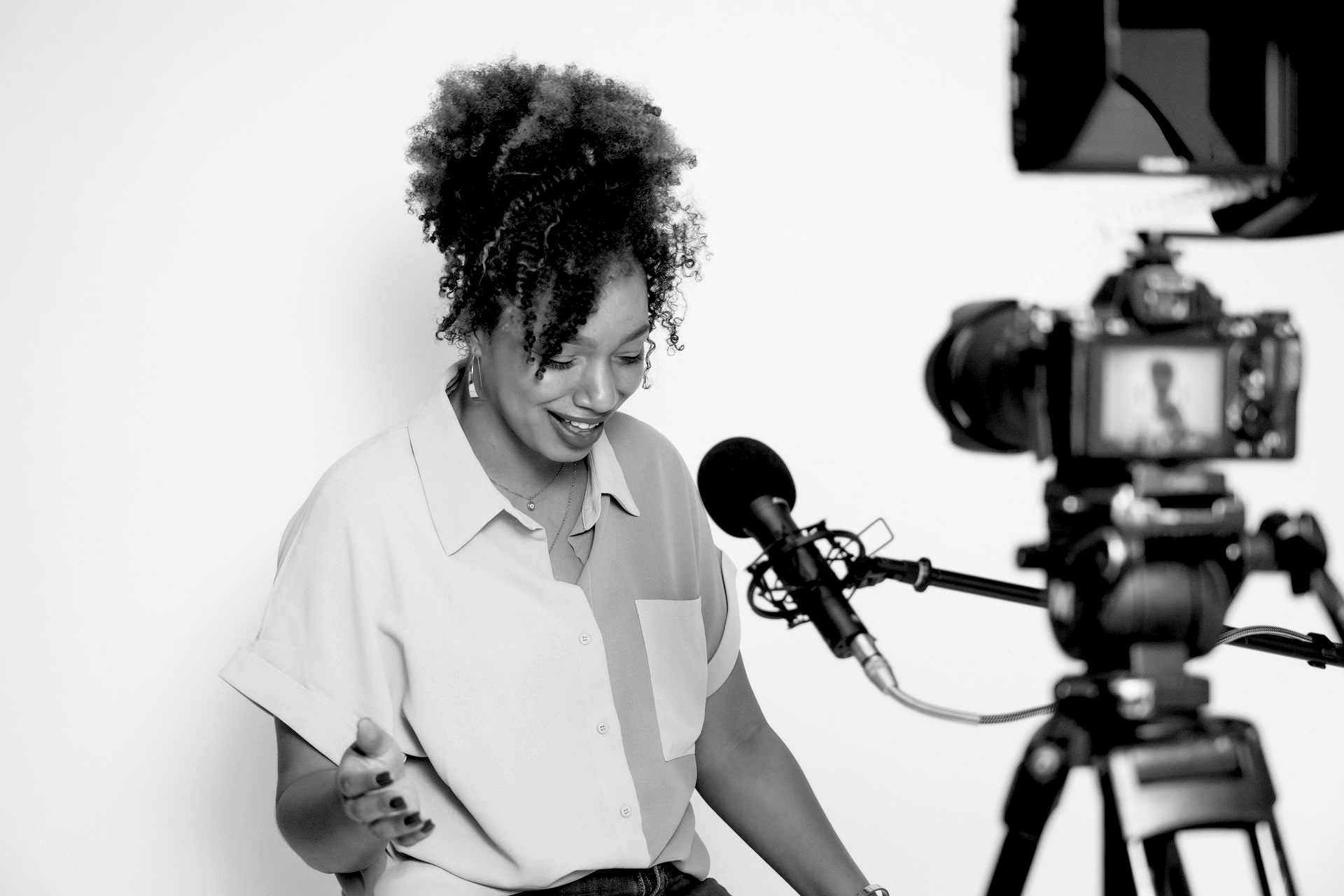
Pros and cons of video podcasting
The Disconnect Between Distribution and Consumption
For years, performance marketers have planned digital campaigns around rigid, channel-specific definitions. Brands traditionally bought a streaming audio spot, a television commercial, or a social media placement, treating each touchpoint as an isolated tactical choice.
But modern consumers do not think in distribution formats; they don’t separate creator content, podcasts, and digital video into distinct mental buckets. Instead, they simply choose an environment and follow the human voices they trust.
Evaluating the pros and cons of video podcasting has become an absolute necessity for modern performance budgets. Data from Edison Research’s Infinite Dial highlights that platforms like YouTube have grown to dominate podcast discovery, particularly among audiences under 35. These demographics treat the platform as an entertainment hub, a podcast player, and a primary search engine simultaneously. What was once considered a strictly audio-first ecosystem has matured into a multi-platform media environment where video plays a central role.
Successful performance strategies must stop planning around channel limitations and start planning around actual audience location.
The Speed of Audience Migration
Changing consumer habits and technological drift mean this platform migration is accelerating. Consumers are now actively choosing screens over audio feeds when interacting with their favorite creators. We’re tracking this progression every day across live performance campaigns rather than relying on abstract theory.
A definitive benchmark can be found in our recent campaign metrics for two of our major enterprise clients, which highlight how quickly audience consumption has migrated over a 24-month period.
For our first client, the consumption share broken down by platform evolved as follows:
- 2024: 34% YouTube video / 66% traditional audio
- 2025: 55% YouTube video / 44% traditional audio
- 2026 Year-to-Date: 79% YouTube video / 21% traditional audio
For our second major client, the share of total purchased impressions delivered via digital video podcast inventory escalated dramatically:
- 2024: 26% of purchased impressions were delivered via YouTube video
- 2025: 38% of purchased impressions shifted to video
- 2026 Year-to-Date: 56% of purchased impressions are delivered via video
We are seeing a similar trajectory across our broader portfolio. In just two years, video has evolved from a supplemental extension of a standard audio buy into the primary delivery platform for many enterprise campaigns.
The Strategic Advantages of Visual Integration
The primary benefit of adding a visual layer to a creator campaign is the premium, television-style presence it gives you without the astronomical costs traditionally associated with the medium. When a viewer watches a host-read integration on their TV, your brand achieves prime living-room exposure. Because you’re piggybacking on the creator’s native setup, you secure high-impact visual placement with no extra production fees from the brand.
Furthermore, video opens up unparalleled creative flexibility for host reads. On an audio-only feed, a host can only describe a service or read a coupon code. On a video podcast, if it is the right kind of product, the host can physically hold it on screen, demonstrate how to use it, or showcase the packaging directly to the camera. This completely eliminates the friction of traditional video production; you simply give the creator the talking points, and they display your product live without requiring an expensive production crew.
This multi-sensory engagement with long-form creator content translates into deep consumer intent. This extended watch time provides a profound trust-transfer from the host to the brand, etching the message into the viewer’s memory far longer than a standard skippable digital banner, or even a regular TV ad spot.
Modern video podcast destinations are expanding past YouTube; creators are taking their programs onto premium streaming networks like Netflix, giving brands a direct avenue to scale their message to television-sized audiences.
For direct-response advertisers, this visual reinforcement bridges the gap between top-of-funnel awareness and bottom-of-funnel conversion. A consumer who sees a physical demonstration while listening to an authentic endorsement will take it much more seriously than one who only hears about it. You achieve the prestige and visual real estate of a traditional broadcast network buy, scaled through the hyper-targeted environment of a trusted digital creator.
Audio still has a role
Despite the benefits, navigating a dual-format landscape means understanding the specific the pros and cons of video podcasting.
Audio-only advertising thrives because it occupies the white spaces of a consumer’s day—moments like a daily commute or doing household chores when their eyes are busy but their ears are open. Video requires an explicit cognitive load, meaning your ad is competing for visual attention within a highly cluttered digital landscape.
While host reads remain low-cost, produced spots are a lot more expensive to execute on video. A pre-recorded audio commercial requires minimal studio time, but a produced visual commercial requires advanced lighting, multi-camera editing, and professional post-production workflows that quickly inflate media budgets. Audio is therefore a cheap and effective alternative.
We often recommend a multi-platform approach that includes both video and audio. This enables you to reach your market at different times of day, in different circumstances, at a variety of price points.
Modern Tracking and Video Attribution
Because the lines between digital video and traditional audio are blurring, legacy direct-response measurement models are no longer sufficient. Relying solely on a voiced coupon code misses the vast majority of your return on investment. Marketers must evaluate success through a holistic view of cross-channel lift.
When video campaigns drop, performance should be gauged by tracking the bigger picture. We look at how video release dates correlate with immediate spikes in direct web traffic and organic, branded search volume. By identifying how visual exposure moves the needle across your entire digital funnel, you can see the true impact of cross-platform media.
This holistic tracking methodology accounts for the delayed conversion reality of modern consumption. A viewer may watch a long-form creator video on their television in the evening but delay their actual purchase until they are on their laptop the next morning. If your data architecture only attributes success to direct link clicks, you will systematically under-value your highest-performing video channels. Expanding your evaluation criteria to capture total ecosystem lift ensures your capital is directed toward true revenue drivers.
Taking Advantage of Video with a 360-Degree Strategy
Our agency approach is built entirely around this platform-agnostic reality. We call ourselves ROI MEDIA 360 because we like to look at all the perspectives when building media strategies.
True ROAS can’t be achieved by staying tied down to what worked last year or last decade; it requires an agile, data-driven mindset. We don’t force campaigns into formats simply because that’s how things used to be done, nor do we think of ourselves as being pro-radio, pro-audio, pro-podcast or pro-anything else.
Instead, we look at the entire landscape to identify where high-intent attention lives today and design multi-platform strategies around actual consumer behavior. We meet the creators where they live and capture the audience where they choose to engage. We use our deep data sets and network leverage to construct media plans that cover all angles, moving quickly to keep our partners ahead of the curve.
Right now, our internal metrics prove that video is generating meaningful ROAS for advertisers, so we are leaning heavily into the visual space. If consumer behavior shifts next month or next year, our strategy will evolve right along with them. This complete perspective allows us to remain nimble, capturing high-converting traffic across emerging platforms while abandoning channels that no longer deliver a premium return.