
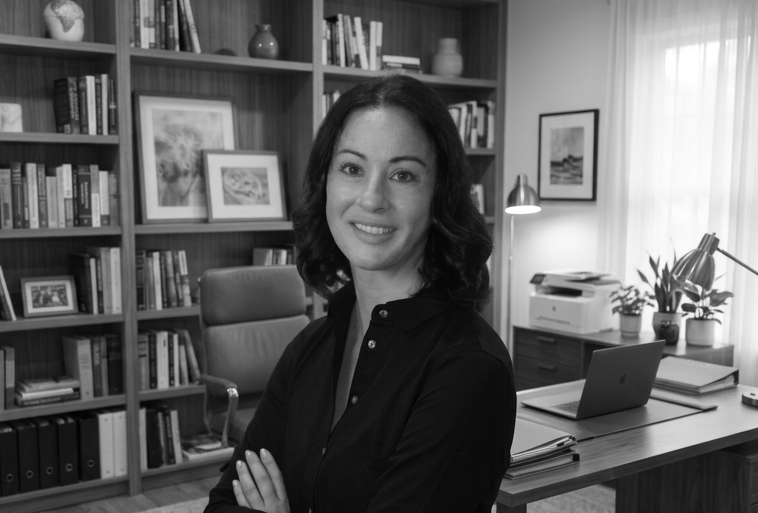
A front-row seat at the growth of podcasting
How did you first break into the media world, and what led you to becoming a podcast media buyer?
I’ve been in media since 2004, but like most people in this industry, I definitely didn’t wake up at 16 thinking, “I want to be a media buyer when I grow up!” I actually started out in music video and commercial production in Santa Monica. It was the early 2000s, when labels were spending real money on music videos. I worked with directors like Len Wiseman—who directed the Underworld movies, Live Free or Die Hard, and videos for Static-X, En Vogue, and Rufus Wainwright. I was even a stand-in in the En Vogue “Riddle” video!
Eventually, a SAG strike hit, local LA production dried up, and the agency went under. A friend had a small agency in Long Beach that needed a media buyer. I had no idea what a media buyer actually was, but in my early twenties, I thought, “I can do anything!”
I jumped straight in and realized that music video production and media buying are essentially the same skill set. It’s pure project management: taking a budget, pitching an idea, pulling all the pieces together, and delivering a final product.
How did you transition from local TV and radio into the early days of podcast advertising?
I spent years buying local cable, LA broadcast television, and national network TV. Eventually, I landed at Revenue Frontier (which was acquired by Havas Edge). They needed a buyer for their radio department, and since air is air, I stepped in.
That was right at the absolute beginning of podcast advertising. We were just starting to explore podcasts for Match.com back when pixel tracking was first emerging. Opportunities were hit-or-miss back then, but it gave me a front-row seat to the medium’s potential.
You spent nearly seven years at Oxford Road during a massive period of growth. What was that era like?
I joined Oxford Road right at their five-year anniversary. At the time, they were shifting away from television to focus heavily on audio. A lot of people saw the industry transition as a risk, but I saw it as a massive season of growth.
Back then, it was just a small team of us on the audio side making it work. Over the next six and a half years, we helped grow that department from two buyers and two assistants into an industry powerhouse. I got to watch podcasts evolve from a niche experiment into the behemoth it is today, seeing the shift from simple RSS feeds to video integration and streaming platforms.
What brought you to ROI MEDIA 360, and what makes the culture here different?
I relocated to the Carolinas in 2022 for a change of pace, and I was already in regular touch with Patrick, who would call to pick my brain on streaming audio strategies. When I was ready for a new chapter after my long tenure at Oxford Road, joining ROI MEDIA 360 was a natural fit.
What I love about ROI MEDIA 360 is that early agency grit. It’s a tight-knit team of true industry veterans—like Patrick, Tyler, and Jen—who have decades of experience, but without the bureaucratic corporate layers. We are nimble, we are hands-on, and we get to give our clients direct, high-touch strategic focus.
What shows do you listen to in your personal time?
For lighter pop culture, I love shows like SmartLess and Armchair Expert. But I also really gravitate toward compelling, narrative-driven shows. Ear Hustle—which covers the California prison system—is fantastic, and I’ve listened since the beginning. I also really enjoy Darknet Diaries, Serial, and Dirty John.
And finally, what do you like to do when you’re not managing media campaigns?
My husband, daughter, and I live in a lake community, so we love going for walks, hiking, being on the water, reading, and binging good TV shows.
My fun secret hobby is that every August, I go to the Labyrinth Masquerade Ball in Los Angeles, which is based on the movie Labyrinth with Jennifer Connelly and David Bowie. I’m a secret cosplayer, so I spend a lot of my free time throughout the year designing and building elaborate costumes for the ball!